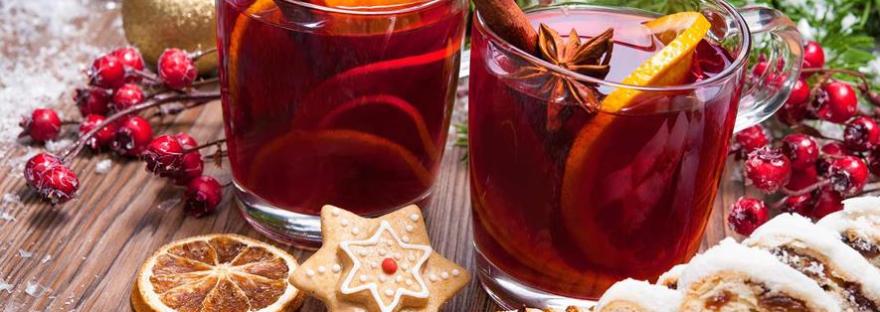
* It’s never truly Christmas without a glass of mulled wine*
Assail your senses and warm your spirit for Christmas is finally here!
‘Tis the Season for Mulled wine, Christmas spice and holiday cheer! Children singing merrily along to Christmas songs whilst their parents rummage through their best kept hand-me-down recipes, compiling their shopping list of the fundamental ingredients for all their Christmas dishes…
But one ESSENTIAL winter standard along side a log fire and roasting chestnuts is a much cherished ‘hot’ mulled wine. While you search for your recipe of the drink you will be making this year, be it enhanced with Vodka, Cognac, Port or the standard milder version, let’s take a step through time and see the story of how mulled wine once again made it onto our Christmas table this year…
Wine has been a major part of human culture since we first figured out how to make it around 4100 BC (or so research has shown us). When a bad harvest hit a beautifully tendered vineyard, in order to prevent waste, and to make sure as much alcohol as possible was palatable, they would heat the wine and infuse it with spices so as to mask the flavour of the spoiled wine or weak vintages.
Europeans later found that steeping herbs, spices and a host of other ingredients in wine for medicinal purposes made a pretty potent health potion, and heating it was an effective way of fighting off the cold winter chill.
The first use of the word “mull” as a verb, meaning “to heat, sweeten, and flavor (as wine or cider) with spices,” was in 1618 by Merriam-Webster. Along the way, a number of references have been made by famous poets and writers, one of those being Shakespeare whos many lines praise “Sack”, a sweet and fortified wine that is sometimes spiced, and Charles Dickens, who cited a version of mulled wine called ‘Smoking Bishop’ in his 1843 novel “A Christmas Carol.” Mulled wine’s association with the holidays was henceforth solidified.
The best thing about mulled wine are the variations in which you can make it. In France, they call it Vin Chaud, and it usually contains a bit of Cognac along with the wine and spices. In Italy, they call it Vin Brúlé, and they make it with full-bodied reds. In Germanuy, Glühwein is found at all the Christmas markets full of citrus and cinnamon. Similarly, Glögg found in Sweden and other Scandinavian countries has citrus and is often mixed with port. China has their own version called Fa Diu, made from rice wine with plums, and Turkey has a version called sicak sarap with figs and apricots!
The most commonly used ingredients include cinnamon, ginger, clove, anise star, sugar or honey, vanilla, and citrus peel (most often orange). Due to their being differences in recipes depending on region, other spices such as cardamom, coriander seed, mace, bay leaf, allspice and peppercorns can also be used. Sometimes, additional fruit, such as dates, cranberries, apricots, plums, and apple are included.
Mulled wine is commonly kicked up a notch by the addition of port, sherry, cognac, brandy or other liquors.
You can play with your favourite fruits and spices and make your own special mulled wine blend!
I would love to try your recipes and see your photos so make sure to attach them below and let’s all share the taste of Christmas…
 QuIrKaLiCiOuS