Christmas, FOOD

The tale of the Christmas Stocking

҉۪Twas the night before Christmas, when all through the house
Not a creature was stirring, not even a mouse;
The stockings were hung by the chimney with care,
In hopes that St. Nicholas soon would be there;”

‘A Visit from St Nicholas’ – Clement Clarke Moore 1823

Only a few days left ’til Christmas!! Have you finished decorating your house? If you are like me, this began the minute November rolled in… the radio was tuned into the Christmas channels, the boxes filled with all the decorations scattered the living room, the house smelled of freshly baked Christmas cookies and among the cluster and somewhat organised chaos, sat my son and dog waiting impatiently to dig in and unleash Christmas.

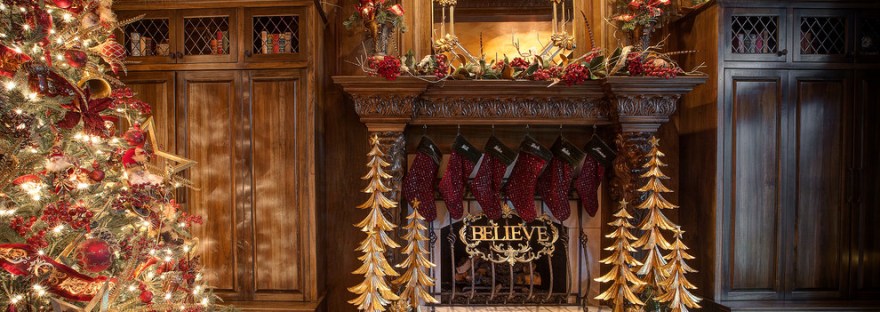
Alongside the Christmas tree, all the beautiful ornaments and the large decorative wreath for the front door is one of the most widely known and told of traditions as far as one can remember…the Christmas stocking.

Christmas stocking ad from a 1918 catalogue

Since the 1800’s, and their most documented reference in ‘A Visit from St Nicholas’, the stocking has evolutionised and transformed from the ordinary stocking found in a common drawer to something more extravagant, and in most cases, handmade. Even the lack of a fireplace or mantle was no hindrance for those who believed in the Christmas spirit. In some cases the stocking could be seen hung from other objects, even rifles (during WW II).

Most commonly, stockings throughout the 1950s would feature some reference to Santa Claus, his reindeers, or generally contain winter and snow-themed patterns.

Soon after, Christmas stockings became more of a fashionable ornament than anything else.

The most popular folklore as to why stockings are hung at Christmas goes something like this… A recently widowed man and father of three girls was having a tough time making ends meet. Even though his daughters were beautiful, he worried that their impoverished status would make it impossible for them to marry. St. Nicholas was wandering through the town where the man lived and heard villagers discussing that family’s plight. He wanted to help but knew the man would refuse any kind of charity directly. Instead, one night, he slid down the chimney of the family’s house and filled the girls’ recently laundered stockings, which happened to be drying by the fire, with gold coins. And then he disappeared. The girls awoke in the morning, overjoyed upon discovering the bounty. Because of St. Nick’s generosity, the daughters were now eligible to wed and their father could rest easy that they wouldn’t fall into lonely despair.

For years after, citrus fruits, mainly oranges tended to end up in Christmas stockings. Do you know why? Some say it’s from a time when fresh fruit was more difficult to come by and finding an orange in your stocking was a huge treat. But a different version of that beautiful-daughters-distraught-father legend swaps the gold coins left by St. Nick with three gold balls left in each stocking. Understandably, the solid gold balls tradition isn’t so easy to replicate and that’s why their citrus look-alikes have found their way into stockings alongside trinkets and baubles.

Stockings, from being hung exclusively on the fireplace mantel, were now seen hung on Christmas trees, in children’s bedrooms upstairs, and even across washing lines that were fastened across ends of the room.

I remember Christmas Eve, being snuggled tight in my bed, with my over-sized stocking lying across the bottom of my bed, waiting impatiently to hear the jingling of reindeer bells followed by the pitty-patter of footsteps on the roof. Pure excitement flowing through my veins. Did I ever hear this? No. Mostly because I ended up nodding off to sleep well before Santa arrived. But low and behold, on Christmas day my stocking was filled! Santa had come and I had missed him yet again. Oh well, there was always next year!

What are your fond memories of Christmas Eve? Do you have a particular stocking of choice, or any folklores that have been told to you by your parents, and theirs alike?

I love to make Christmas ornaments and still have the knitted stockings from my childhood (which I continue to hang up every year!).

In posts to come, I will be showing some of those ornaments and how to make them.

I would love to see and hear from you all, so share your pictures and tales below. If you have any pictures from your grandparents or even earlier share them too! It would be lovely to see how each and every one of you celebrate this time of year, and how we have adapted throughout history.
Christmas, FOOD

Christmas in a Glass – Mulled Wine and it’s Travel Through Time

* It’s never truly Christmas without a glass of mulled wine*

Assail your senses and warm your spirit for Christmas is finally here!

‘Tis the Season for Mulled wine, Christmas spice and holiday cheer! Children singing merrily along to Christmas songs whilst their parents rummage through their best kept hand-me-down recipes, compiling their shopping list of the fundamental ingredients for all their Christmas dishes…

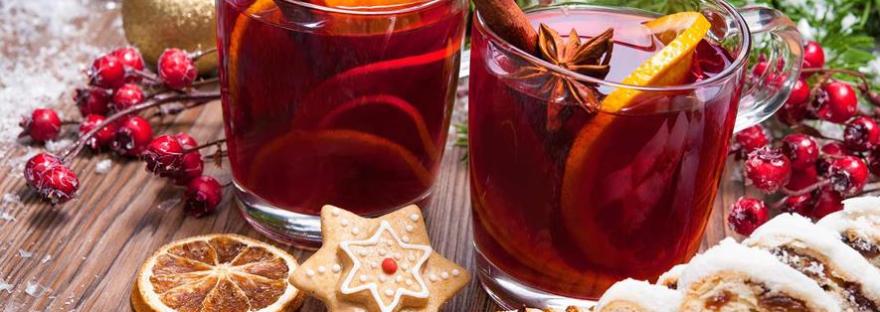
But one ESSENTIAL winter standard along side a log fire and roasting chestnuts is a much cherished ‘hot’ mulled wine. While you search for your recipe of the drink you will be making this year, be it enhanced with Vodka, Cognac, Port or the standard milder version, let’s take a step through time and see the story of how mulled wine once again made it onto our Christmas table this year…

Wine has been a major part of human culture since we first figured out how to make it around 4100 BC (or so research has shown us). When a bad harvest hit a beautifully tendered vineyard, in order to prevent waste, and to make sure as much alcohol as possible was palatable, they would heat the wine and infuse it with spices so as to mask the flavour of the spoiled wine or weak vintages.

Europeans later found that steeping herbs, spices and a host of other ingredients in wine for medicinal purposes made a pretty potent health potion, and heating it was an effective way of fighting off the cold winter chill.

The first use of the word “mull” as a verb, meaning “to heat, sweeten, and flavor (as wine or cider) with spices,” was in 1618 by Merriam-Webster. Along the way, a number of references have been made by famous poets and writers, one of those being Shakespeare whos many lines praise “Sack”, a sweet and fortified wine that is sometimes spiced, and Charles Dickens, who cited a version of mulled wine called ‘Smoking Bishop’ in his 1843 novel “A Christmas Carol.” Mulled wine’s association with the holidays was henceforth solidified.

The best thing about mulled wine are the variations in which you can make it. In France, they call it Vin Chaud, and it usually contains a bit of Cognac along with the wine and spices. In Italy, they call it Vin BrĂşlĂ©, and they make it with full-bodied reds. In Germanuy, GlĂĽhwein is found at all the Christmas markets full of citrus and cinnamon. Similarly, Glögg found in Sweden and other Scandinavian countries has citrus and is often mixed with port. China has their own version called Fa Diu, made from rice wine with plums, and Turkey has a version called sicak sarap with figs and apricots!

The most commonly used ingredients include cinnamon, ginger, clove, anise star, sugar or honey, vanilla, and citrus peel (most often orange). Due to their being differences in recipes depending on region, other spices such as cardamom, coriander seed, mace, bay leaf, allspice and peppercorns can also be used. Sometimes, additional fruit, such as dates, cranberries, apricots, plums, and apple are included.

Mulled wine is commonly kicked up a notch by the addition of port, sherry, cognac, brandy or other liquors.

You can play with your favourite fruits and spices and make your own special mulled wine blend!

I would love to try your recipes and see your photos so make sure to attach them below and let’s all share the taste of Christmas…

FOOD

It’s the most wonderful time of the year…

It’s that time of year again when the smell of Christmas fills the air. With freshly roasted festive lattes, eggnog and spiced hot chocolate filling every bakery and coffee shop whilst an abundance of Christmas cakes, festive treats and delicious biscuits occupy every counter. OH gosh..what to choose? Where to start?

The warming memories of childhood years, chestnut picking and then roasting the chestnuts by an open fire, snuggled on the couch with a warm knitted blanket cupping that hot mug of cocoa, and singing along to those all to familiar Christmas carols, evading every thought.

Whispered excitement over the anticipated window displays of every high street store buzzing in the air while Christmas lights were being put up all over the town spreading Christmas cheer. I remember as a child growing up, the most spectacular Christmas lights display was put up along Regents Street, and curiosity would be wreaking havoc on our little souls as we waited with much anticipation at the release of the theme for the current years display, and when it finally came…WOW, was it breathtaking. As we walked along the street under the lights, it was as if the sky was raining stars, touching and uplifting every spirit.

At the heart of most Holiday recipes, a combination of the most beautiful fragrant spices are lurking. Among those are cinnamon, ginger, cloves and nutmeg. A few of the best traditional Christmas culinary delights, which i have had the privilege of trying, come from all over the world. A traditional German baked Christmas treat, Lebkuchen, is a soft biscuit like treat, somewhat resembling gingerbread. A specialty of the Netherlands and Belgium are Speculaas, which coincidentally are also cousins of the gingerbread, only lighter and more delicately spiced, where intricately carved wooden molds are used to form the cookies into bas-relief images of characters and symbols from stories about Saint Nicholas, or Sinter-klaas, whose name day, December 6, kicks off the Christmas season in that part of the world. The famous BĂ»che de NoĂ«l or Yuletide Log, is the main star on the Christmas dining table in France, and in Great Britain the Christmas pudding/cake  flambĂ©ed with Brandy is the perfect dessert after a satisfying Christmas Eve dinner along with Mince Pies. Panettone which is attributed to the Italian city of Milan in the Middle Ages, is a sweet bread which it’s basic origins go back to the Roman Empire, when ancient Romans sweetened a type of leavened cake with honey, and in Greece, Melomakarona can be found in every household come December (if not before).

The battle for the BEST Christmas tree has begun..Who is going to find the biggest, the fullest, the best shaped, and most unique tree among all others?! The boxes from the attic containing all the ornaments from past years, and those handed down from generation to generation, have been dusted and taken down awaiting the moment to be opened and merrily placed upon the very special chosen tree.

The word ‘Christmas’ means a lot of different things to each one of us. I would LOVE to hear about YOUR favourite Holiday treat, tradition and memory! We all have our little quirky things that we love, so let’s share and spread some of that Christmas Cheer!