FOOD

The history behind Horseradish

Legend has it the Delphic oracle told Apollo, 

“The radish is worth its weight in lead, the beet its weight in silver, and the horseradish its weight in gold.” 

There are very few things in this world that can beat the nasal-passage clearing, palate-rousing flavour of the knobbly root.

Whilst horseradish has been used worldwide for thousands of years, it is prized for its medicinal and gastronomic qualities, and bears a very intriguing history.

This root is a cruciferous vegetable, part of the Brassica genus of plants, alongside mustard, wasabi, cabbage, brussels sprouts, kale and more, and contains multiple compounds that may provide health benefits, including antibacterial and anticancer effects.

Horseradish has been used for centuries as an aphrodisiac, to treat rheumatism, and a flavourful accompaniment for most dishes.

So, how did the name ‘horseradish’ come about? Well, it is said that this perennial plant was cultivated in Greece and used both as a rub to treat lower back pain and as an aphrodisiac. From there it spread from east to west, with England being introduced to the root via Germany. The Germans called it “meerrettich” (sea radish) as it grew by the sea. It is believed that the English mispronounced the German word “meer”, and mistook the word to be a compound of the words “Mahre’ and “rettich”, meaning radish, and began calling it “mareradish.” As the German word “mahre“, is related to the English word “mare“, and both “rettich” and “radish” come from the Latin word “radix”, meaning root, eventually, it became known as horseradish. The word “horse” (as applied in “horseradish”) is believed to denote large size and coarseness.

When this root is cut, an enzyme breaks down a compound called sinigrin, a powerful antioxidant, into a mustard oil, giving horseradish its telltale odour and taste. This oil may have powerful antibacterial properties, with studies suggesting that it may fight a range of dangerous bacteria, including E. coliH. pylori, and Salmonella. It is also used for kidney stones and urinary tract infections.

Furthermore, it’s rich in a variety of healthy plant compounds, including glucosinolates, which break down into isothiocyanates and may protect against cancer, infections, and brain diseases.

So, you may recall us mentioning that horseradish is known for its nasal-passage clearing effect. For those of us that have eaten horseradish with a little too much zest, you will be well acquainted with the burning sensation experienced in your sinuses and throat, not to mention the tears that roll down your cheeks. For this reason, it is used to treat colds and breathing issues, alongside acute sinusitis and bronchitis.

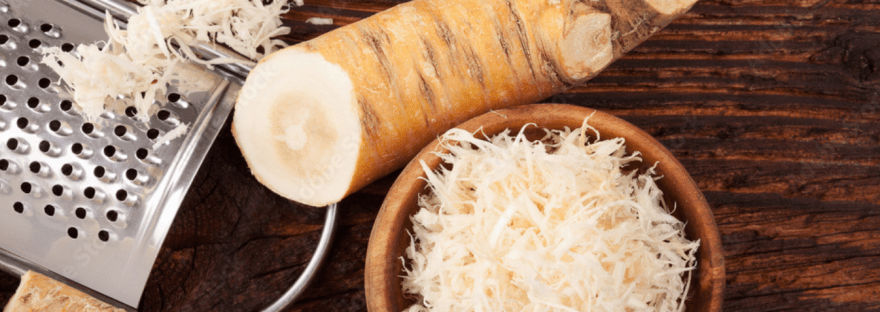
Prepared horseradish is made by peeling and grating the fresh horseradish root and storing it in vinegar, and salt. This is not the same as horseradish sauce which is widely seen on tables accompanying cuts of meat, poultry, or fish. On the contrary, horseradish sauce combines the prepared horseradish with cream, sour cream, or mayonnaise, which makes it much milder and creamier.

Once grated, the fresh horseradish can be kept in an airtight container or bag for around five to six days in the refrigerator, before it starts drying, or placed in the freezer for future use in dishes. The prepared horseradish, on the contrary, can be stored in an airtight container in the refrigerator for up to six weeks.

FOOD

Street Food…The Antidote To Fast Food.

Urbanisation and street food go hand in hand.

As people’s palate change, and we become receptive to a variety of different ingredients, flavours and cuisines, we are seeing an extraordinary leap in innovation concerning flavour combinations and the ways in which food is served.

The roots of street food date far back in history, to the birth of civilisation. In fact, it is believed that the first ever distribution of such street food began on the streets of Ancient Greece, with the sale of small fried fish. Having said this, there is an ongoing debate whether in fact it originated in Greece or whether its roots are in Asia, where it is more widely found. Regardless of this, the reason it transpired remains the same. It began as a way to cater for poor urban residents, whose tenement homes did not have ovens or hearths. And so provided nourishing dishes that were affordable by all.

Street food has evolved alongside civilisation, ever so discreetly. However, it’s most often out of poverty that the best of human ingenuity emerges, and so forth emerged the eternal recipes that would provide the foundations of an entire culinary culture.

So let’s take a minute to delve into a few different areas and their integration into street food… in Paris there were the “pâstés”; pastry cases with various fillings, usually stewed meat or vegetables. These then lead to the term “patisserie”. The anglo-saxon lower class also worked on the same principle of pies: a crust made of flour, lard and water containing a cooked filling, and in Britain, fish and chips were sold on the streets wrapped in newspaper.

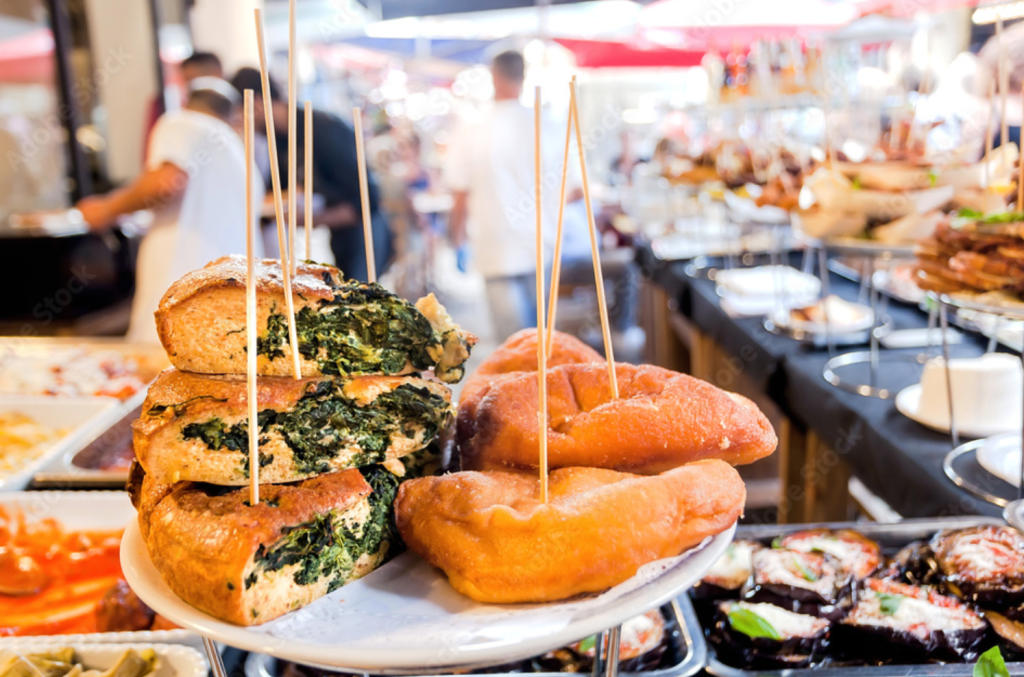
Spinach pie, grilled vegetables, and local street snacks in the stall of a traditional food market

Due to the fact that street food was born with the primary need to feed the poorer community, cheaply, it has always been considered of little worth. But this is far from the case. Street food is often the last defence for a place’s traditions and identity. It’s what identifies and distinguishes one area from another.

Those that have not been exposed to the street food culture tend to shy away from it thinking it is unhealthy and unhygienic. However, despite concerns about contamination at street food vendors, the incidence of contamination is very low with a number of studies showing rates comparable to those of restaurants.

Today, while some street foods remain regional, many are not, having spread wide and far.

So why do we love to eat fast food? Well, It’s economical, easily accessible, often nutritious, and offers an endless culinary variety of traditional dishes for every taste. Although we may recognise that the majority of street food is not extremely healthy, we love the fact that there are large varieties available at a cheaper price, and that the food is served ‘on the spot’. In most places, street food also represents the local cuisine, in a more authentic manner.

The contribution of street food vendors to the economy has been greatly underestimated and neglected, as is vital for the economic planning and development of many towns.

Remember:

It’s fast food, NOT junk food.

It’s a way of life!

MENTAL HEATLH, SUPERFOODS

Let’s Chat About Stress Busting Foods

Stress is everywhere, affects us all, and means different things to different people. Where one thing may cause stress in one person, it may be of little concern to another. There are some people better able to handle stress than others and not all stress is bad.

It is a natural physical and mental reaction to life experiences, and is the body’s reaction to harmful situations, whether real or perceived.

When you feel threatened, your nervous system, primarily your hypothalamus sends a signal to your adrenal glands instructing them to release the stress hormones adrenaline and cortisol, which stimulate the body for emergency action, allowing you to act in a way to prevent injury… your heart beats faster, muscles tighten, blood pressure rises, your breathing quickens, and your senses heighten. This reaction is known as “fight-or-flight,”.

While a little stress may actually be beneficial, too much stress can have adverse effects, wearing you down making you sick, both mentally and physically, and is known to affect all systems of the body including muscles, respiratory, cardiovascular, endocrine, gastrointestinal, nervous and reproductive systems.

Stress can affect all aspects of your life such as your body, your thinking ability, emotions, and your behaviour. There is no part of you that is immune to the effects of stress, but due to the fact that each one of us handles stress differently, our symptoms may vary.

With acute, momentary stress, your muscles tighten all at once and then release when the stress passes. In chronic conditions whereby the stress has not passed, the muscles are left in a more or less constant state of tension which leads to a number of triggered reactions else where in the body, such as tension-type headaches and migraine headaches which are known to be associated with chronic muscle tension in the shoulder, neck and head region. Musculoskeletal pain in the low back and upper extremities have also been linked to stress.

With regard to the gastrointestinal aspect, environmental causes have been seen to be the determining factor in a large percentage of cases. This could be due to the fact that once the stress hormones are released, they direct more oxygen and blood to the brain and muscles thus depleting the gut of them and affecting both the systemic and gastrointestinal immune and inflammatory responses allowing for disorders such as diverticulitis, inflammatory bowel disease (IBD), irritable bowel syndrome (IBS) and other functional gastrointestinal diseases, food antigen-related adverse responses, peptic ulcer and gastro-oesophageal reflux disease (GERD) to occur.

The physiological effects of stress on the gut include alterations in gastrointestinal motility, an increase in visceral perception, changes in gastrointestinal secretion, an increase in intestinal permeability, negative effects on regenerative capacity of gastrointestinal mucosa and mucosal blood flow, and negative effects on intestinal microbiota.

Foods can help subdue stress in a number of ways….

All carbohydrates increase levels of serotonin, a mood-enhancing chemical that decreases anxiety and stress, whilst increasing happiness, and mood. Therefore, comforting foods, such as a warm bowl of porridge (oats) is perfect, but for a steadier release of this hormone, whole grains are better as they digest slower. Other foods that also increase serotonin levels naturally are pineapple, salmon, eggs, nuts & seeds, turkey & poultry, tofu, soy, milk and cheese.

Certain foods can reduce the levels of cortisol and adrenaline stress hormones, thus consequently reducing the effect of stress, such as asparagus, low-fat milk, cottage cheese and fruit, almonds and walnuts, tuna, blueberries, green tea, whole grains, salmon, bananas, pears, and at least 70 percent dark chocolate (as one to two ounces per day can significantly improve mood and mood chemicals)

Other foods and supplements that can help combat stress are as follows;
– Vitamin C, found in kiwis and oranges, reduce the levels of stress hormones while strengthening the immune system.
– Magnesium, found in spinach, soybeans and salmon. Too little magnesium may exacerbate headaches and fatigue already caused by stress.
– Omega-3 fatty acids, found in fish such as salmon and tuna
– Potassium, found in avocados and bananas

A healthy diet can help counter the impact of stress by boosting the immune system and lowering blood pressure.

Christmas, FOOD, Travel

One of Europe’s best Christmas Markets – Tallinn, Estonia

Strings of light twinkle, special foods are prepared and communities come together. Christmas markets are at the heart of winter holidays where delicious flavours and cheer await the whole family…

That’s right… Christmas market season has finally begun! And for a traditional Baltic Christmas market, Tallinn is hard to beat.

This year i’m surprising my little sister and my wonderful brother in-law with a trip to Europe’s top most spectacular and festive Christmas Market.

With it’s Christmas spirited fairy tale setting, twinkling lights, cozy atmosphere, and the best-preserved medieval town center in the world, Tallinn is considered one of the 10 most beautiful Christmas Markets in Europe!

Tallinn’s Christmas Market is home to one of Europe’s oldest holiday traditions dating back 250 years. Since 1441 a competition was held every year to find the most important and suitable spruce to decorate the town square, making it the first Christmas tree ever to be put on display in Europe.

Every year, on the 24th of December, the President of Estonia declares Christmas Peace, a 350-year-old tradition that began back in the 17th century by the order of Queen Kristina of Sweden.

Food is one of the most important aspects of any Christmas. For Estonians, Christmas food includes many local staples such as blood sausages, pork, potatoes, vegetables, lingonberry jam, pickled pumpkin, jellied meat, sauerkraut, and of course Estonian black bread, all of which fill the table come Christmas Eve.

Gingerbread, dried fruit, nuts, all sorts of chocolate, and tangerines are just some of the traditional snacks available, and of course no visit to Estonia in winter is complete without a mug of glögg or hõõgvein (mulled wine).