There comes a time when one’s focus, concentration, memory and general retention of knowledge or facts may come in to question. Most often directly from the individual themselves.
At times like this we must bear in mind that everyone is different, unique, both in the way they store information and in the process of retrieving it. That’s how and why we are each able to excel in different fields. Not all of us are mathematically minded, or great at literacy skills… but we can all work towards proving the best foundation, and optimal conditions for our minds to function.
Are there times when you feel tired, sluggish or forgetful without any logical reason?
A reason for this could in fact be our thyroid gland. You see, the thyroid gland is responsible for a number of things… for one, it produces hormones that regulate the body’s metabolic rate controlling heart, muscle and digestive function, brain development and bone maintenance, and its correct functioning depends on a good supply of iodine from the diet.
An underactive thyroid is common in adults and is frequently associated with cognitive issues, such as increased forgetfulness, mental slowing and “brain fog”. As the hippocampus is a thyroid hormone receptor-rich region of the brain involved in learning and memory, any alterations in thyroid hormone levels have been reported to impair hippocampal-associated learning and memory, synaptic plasticity, and neurogenesis.
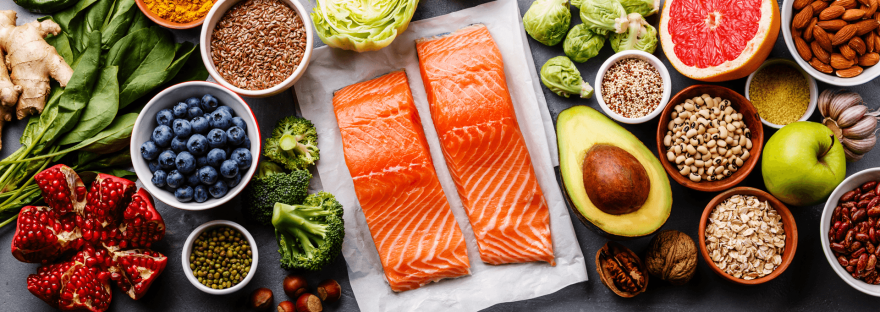
You can support your memory and brain function with a variety of nutrients and antioxidants…and plenty of liquids. Fruits and vegetables are bursting with antioxidants and it’s usually those that are brightly coloured that are the best.
Nootropics are natural or synthetic supplements or medications that are known as cognitive enhancers… brain supplements that boost cognitive performance… and are particularly for executive functions, memory, creativity, or motivation, in healthy individuals.
Caffeine is arguably the most potent nootropic you can find, improving your alertness and focus while quickening your reaction times, but this is not a long term option. A few of the more natural, nutritional supplements can be seen below..
1. CAROTENOIDS
These are the yellow, orange and red pigments synthesized by plants. So, CAROTENE, LUTEIN, and LYCOPENE. These can be found in carrots (also great for eye health), apricots, asparagus, broccoli, mangoes… all the bright colours!
2. CREATINE
This is generally found in various meats, seafood and dairy.
3. OMEGA-3 FATTY ACIDS
Can be found in good quantities in salmon, flax and chia seeds, soybeans and walnuts.
4. FISH OILS
Usually found in oily fish such as salmon, herring, tuna, anchovies, and mackerel, but can also be found in the liver of other such as cod liver and in oysters.
5. RESVERATROL
Now this one is interesting… Resveratrol is found in red wine, at a larger quantity than in white wine as it is fermented with grape skins longer, and therefore contains a greater quantity of resveratrol… Thus laying to the claim that red wine is better for you as it contains a greater amount of antioxidants…and all due to the red pigmentation of the grapes.
Dark berries, peanuts, cocoa, blueberries and cranberries are also a few more examples of foods that contain resveratrol.
6. VITAMIN E
A powerful antioxidant, seen to be depleted in smokers, that can be found in spinach, broccoli, sunflower seeds, nuts (such as almonds), fortified cereals, and avocado.
7. B VITAMINS (especially B12)
Can be found in most of the foods already mentioned such as salmon, avocado, beef and fortified cereals, just to mention a few.
All these are but a few of the natural supplements one can introduce in to their diet to improve, or boost, their cognitive function.
 QuIrKaLiCiOuS