SUPERFOODS

Let’s BEET This Cold

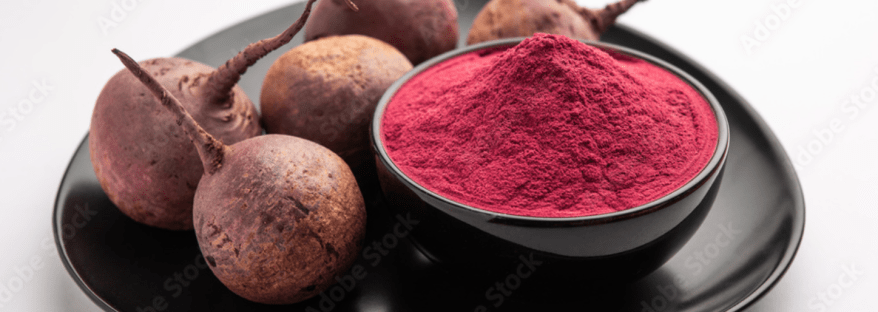
Beetroot is classified as one of the top ten plants with the highest antioxidant activity!

Beetroots and its various forms have been gaining popularity as a superfood globally, especially among athletes looking to improve their performance, and in health individuals to reduce blood pressure, and increase blood flow.

This was fuelled by a vast interest in the potential use as a disease-preventing food and for general health promotion. The health promotional characteristics of beetroot include antioxidant and anti-inflammatory effects, anti-diabetic, anti-carcinogenic, hypertensive, hepatoprotective, and wound healing properties.

Beetroot consists of a number of biologically active phytochemicals such as betalains (which in the context of antioxidation, increase cellular resistance to oxidation, thus decreasing the oxidative damage of lipids. They function to reduce the extent of inflammation in blood vessels, joints, and bones), flavonoids, polyphenols, and saponins, among inorganic nitrate (NO­­­3) which is known for being a multi-functional messenger molecule with implications both in the vascular and metabolic systems.

Beetroot also contains B-vitamins (B1- thiamine, B2-riboflavin, B3-niacin, B5-pantothenic acid, B6-pyridoxine, B9-folates, and B12-cyanocobalamin) as well as folic acid, several essential amino acids, and is a highly potent source of a range of minerals (phosphorus, calcium, magnesium, copper, zinc, iron, potassium, sodium, and manganese).

The fibre derived from beetroot provide a probiotic effect, increasing the proportion of beneficial bacteria in the gut, such as Bifidobacterium and Lactobacillus species.

So to conclude, beetroot provides a wide range of possible health benefits, such as reducing blood pressure, improving digestive health and regularity, lowering the risk of diabetes, preventing arthritis, kidney inflammation, and may assist in decreasing the risk of neurodegenerative disorders such as dementia & Alzheimer’s.

Here are a number of delicious and interesting ways to incorporate beets to your diet;

  • Salad; Beets make a flavourful and colourful addition to any for of salad, whether warm (with couscous or quinoa), or cold (in coleslaw or mixed leave salad)
  • Baked goods; packs an abundance of nutrients and flavours in cakes, bread, and many more
  • Dips; a nice dip is one mixed with yogurt and garlic
  • Juices
  • Soups; both hot and cold
  • Leaves; boil and serve with fresh lemon and garlic (just as you would nettle or spinach)
  • Boiled; try not to over boil as you lose nutrients, best served with a fresh garlic sauce
  • Roasted; best roasted in aluminium foil to preserve the juices

FOOD

The history behind Horseradish

Legend has it the Delphic oracle told Apollo, 

“The radish is worth its weight in lead, the beet its weight in silver, and the horseradish its weight in gold.” 

There are very few things in this world that can beat the nasal-passage clearing, palate-rousing flavour of the knobbly root.

Whilst horseradish has been used worldwide for thousands of years, it is prized for its medicinal and gastronomic qualities, and bears a very intriguing history.

This root is a cruciferous vegetable, part of the Brassica genus of plants, alongside mustard, wasabi, cabbage, brussels sprouts, kale and more, and contains multiple compounds that may provide health benefits, including antibacterial and anticancer effects.

Horseradish has been used for centuries as an aphrodisiac, to treat rheumatism, and a flavourful accompaniment for most dishes.

So, how did the name ‘horseradish’ come about? Well, it is said that this perennial plant was cultivated in Greece and used both as a rub to treat lower back pain and as an aphrodisiac. From there it spread from east to west, with England being introduced to the root via Germany. The Germans called it “meerrettich” (sea radish) as it grew by the sea. It is believed that the English mispronounced the German word “meer”, and mistook the word to be a compound of the words “Mahre’ and “rettich”, meaning radish, and began calling it “mareradish.” As the German word “mahre“, is related to the English word “mare“, and both “rettich” and “radish” come from the Latin word “radix”, meaning root, eventually, it became known as horseradish. The word “horse” (as applied in “horseradish”) is believed to denote large size and coarseness.

When this root is cut, an enzyme breaks down a compound called sinigrin, a powerful antioxidant, into a mustard oil, giving horseradish its telltale odour and taste. This oil may have powerful antibacterial properties, with studies suggesting that it may fight a range of dangerous bacteria, including E. coliH. pylori, and Salmonella. It is also used for kidney stones and urinary tract infections.

Furthermore, it’s rich in a variety of healthy plant compounds, including glucosinolates, which break down into isothiocyanates and may protect against cancer, infections, and brain diseases.

So, you may recall us mentioning that horseradish is known for its nasal-passage clearing effect. For those of us that have eaten horseradish with a little too much zest, you will be well acquainted with the burning sensation experienced in your sinuses and throat, not to mention the tears that roll down your cheeks. For this reason, it is used to treat colds and breathing issues, alongside acute sinusitis and bronchitis.

Prepared horseradish is made by peeling and grating the fresh horseradish root and storing it in vinegar, and salt. This is not the same as horseradish sauce which is widely seen on tables accompanying cuts of meat, poultry, or fish. On the contrary, horseradish sauce combines the prepared horseradish with cream, sour cream, or mayonnaise, which makes it much milder and creamier.

Once grated, the fresh horseradish can be kept in an airtight container or bag for around five to six days in the refrigerator, before it starts drying, or placed in the freezer for future use in dishes. The prepared horseradish, on the contrary, can be stored in an airtight container in the refrigerator for up to six weeks.

SUPERFOODS

Life is a flower, of which love is HONEY

“If everything is honey, and I am what I eat, I must be made of honey…and life is very sweet!”
– Winnie the Pooh

The types and varieties of honey that exist today are virtually unlimited with each one, more or less, boasting a unique taste, texture and special set of health and nutritional benefits.

If you do want to enjoy honey to its fullest, it’s worth taking a little time to understand the differences between the different types.

To begin with, raw, unfiltered honey is very different to the pasteurised honey you find in the supermarkets. You see, after the honey bees collect nectar and bring it back to their hive, the pollen is passed, by mouth, from bee to bee with each one adding crucial enzymes that break down the nectar while adding anti-inflammatory, anti-fungal and antibacterial properties. This is stored in the honeycomb as fructose and glucose. Due to this sugar being hygroscopic, meaning it contains very little moisture but can retain a lot if kept unsealed, the moisture must be evaporated, and is achieved by air circulation (made by the bees fanning their wings to speed up the process) and natural heat. The bees seal the honeycomb with wax in order to protect the finished product. Beekeepers will then come in, take the honey and bottle it. This product is the raw, unfiltered honey.

Unfortunately, most producers will pasteurize the honey to destroy the yeast it contains, making it smoother with a longer shelf life. This is the processed honey you see in most stores. Some produces will take it even further and add high-fructose corn syrup or other sweeteners to increase the quantity and decrease their costs.

Honey varieties are usually classified by the type of flower the nectar is collected from. Honey that comes from just one source is called a “unifloral” honey, while honey produced from the nectar of more than one type of flower is known as “multifloral”.

Fir, or Pine, honey
It has anti-inflammatory and antioxidant properties, it is an immunostimulant, cleanser, helps in the cure of some bacterial, dermatological, degenerative, inflammatory and autoimmune diseases. When applied directly to the skin it can be used as a healing agent for wounds and anti-rheumatic diseases.

Flower Honey – to boost immunity and against cold and flu
It is also known to reduce cholesterol and triglyceride and comes from several types of spring flowers such as dandelion, cherry, plum, apple and other meadow and field flowers.

It is rich in antioxidants and helps in recovering after illness and with seasonal allergies.

Acacia honey – removes stress and is excellent for airway problems
Acacia is known to help clean the liver, regulate the intestines and contains anti-inflammatory properties. It is also said to have a sedative effect, and therefore helps with insomnia, soothes the irritated nervous system and eliminates the consequences of accumulated stress.

It is highly recommended as a remedy for bronchitis and is excellent for respiratory tract and cough relief

Clover honey prevent infection
Contains antibacterial properties that prevent the formation of bacteria internally and on wounds

Honeydew honey – forest honey for digestive problems, anaemia and diabetics
Due to it being many times richer than a flower honey with minerals, amino acids and oligosaccharide probiotics, it is often recommended for digestive disorders. Its high iron content makes it perfect for individuals suffering from anaemia and those recovering after severe illnesses and surgeries. Also, due to its rich mineral salt content and small amount of sugar, it is often recommended for diabetics and athletes.

Chestnut honey – for clean teeth and blood vessels
Due to its strong antibiotic effect, it is considered one of the most healing types of honey. It contains a large amount of minerals and pollen thus aiding in digestive diseases, circulation and blood pressure. It is used widely for the majority of illnesses and inflammations.

Linden honey – ideal to treat cold and flu
Perfect during the times of cold, flu and viruses due to its detoxifying property. As it stimulates sweating and speeds up the heart, it is not recommended for heart condition patients or those suffering from cardiovascular problems.

Rapeseed honey – cleans your liver

Sunflower honey – excellent for heart condition patients and the elderly
Top for treating all kinds of inflammation, accelerating wound healing, breathing problems, throat infection and sinusitis.

Sage honey – for respiratory diseases
Recommended in diseases of the respiratory system and is the perfect remedy against bronchitis and cough as it stimulates expectoration (the removal of mucus from the lungs). It also has antibacterial properties that prevent the creation and spread of bacteria and parasites, and antioxidant properties that provide protection against damage to the body’s cells.

These are but a few of the varieties available to sweeten up your day