“If everything is honey, and I am what I eat, I must be made of honey…and life is very sweet!”
– Winnie the Pooh
The types and varieties of honey that exist today are virtually unlimited with each one, more or less, boasting a unique taste, texture and special set of health and nutritional benefits.
If you do want to enjoy honey to its fullest, it’s worth taking a little time to understand the differences between the different types.
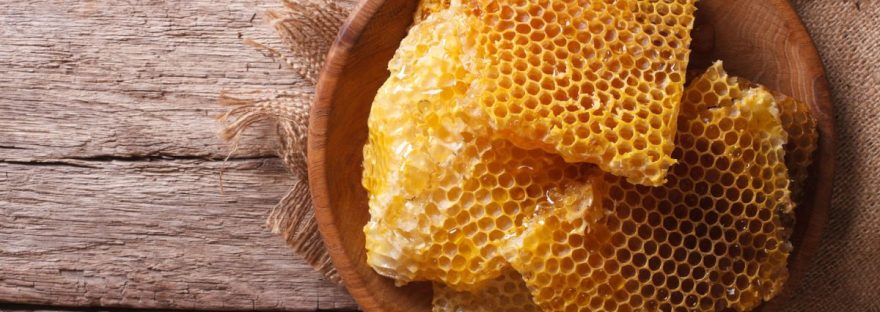
To begin with, raw, unfiltered honey is very different to the pasteurised honey you find in the supermarkets. You see, after the honey bees collect nectar and bring it back to their hive, the pollen is passed, by mouth, from bee to bee with each one adding crucial enzymes that break down the nectar while adding anti-inflammatory, anti-fungal and antibacterial properties. This is stored in the honeycomb as fructose and glucose. Due to this sugar being hygroscopic, meaning it contains very little moisture but can retain a lot if kept unsealed, the moisture must be evaporated, and is achieved by air circulation (made by the bees fanning their wings to speed up the process) and natural heat. The bees seal the honeycomb with wax in order to protect the finished product. Beekeepers will then come in, take the honey and bottle it. This product is the raw, unfiltered honey.
Unfortunately, most producers will pasteurize the honey to destroy the yeast it contains, making it smoother with a longer shelf life. This is the processed honey you see in most stores. Some produces will take it even further and add high-fructose corn syrup or other sweeteners to increase the quantity and decrease their costs.
Honey varieties are usually classified by the type of flower the nectar is collected from. Honey that comes from just one source is called a “unifloral” honey, while honey produced from the nectar of more than one type of flower is known as “multifloral”.
Fir, or Pine, honey
It has anti-inflammatory and antioxidant properties, it is an immunostimulant, cleanser, helps in the cure of some bacterial, dermatological, degenerative, inflammatory and autoimmune diseases. When applied directly to the skin it can be used as a healing agent for wounds and anti-rheumatic diseases.
Flower Honey – to boost immunity and against cold and flu
It is also known to reduce cholesterol and triglyceride and comes from several types of spring flowers such as dandelion, cherry, plum, apple and other meadow and field flowers.
It is rich in antioxidants and helps in recovering after illness and with seasonal allergies.
Acacia honey – removes stress and is excellent for airway problems
Acacia is known to help clean the liver, regulate the intestines and contains anti-inflammatory properties. It is also said to have a sedative effect, and therefore helps with insomnia, soothes the irritated nervous system and eliminates the consequences of accumulated stress.
It is highly recommended as a remedy for bronchitis and is excellent for respiratory tract and cough relief
Clover honey – prevent infection
Contains antibacterial properties that prevent the formation of bacteria internally and on wounds
Honeydew honey – forest honey for digestive problems, anaemia and diabetics
Due to it being many times richer than a flower honey with minerals, amino acids and oligosaccharide probiotics, it is often recommended for digestive disorders. Its high iron content makes it perfect for individuals suffering from anaemia and those recovering after severe illnesses and surgeries. Also, due to its rich mineral salt content and small amount of sugar, it is often recommended for diabetics and athletes.
Chestnut honey – for clean teeth and blood vessels
Due to its strong antibiotic effect, it is considered one of the most healing types of honey. It contains a large amount of minerals and pollen thus aiding in digestive diseases, circulation and blood pressure. It is used widely for the majority of illnesses and inflammations.
Linden honey – ideal to treat cold and flu
Perfect during the times of cold, flu and viruses due to its detoxifying property. As it stimulates sweating and speeds up the heart, it is not recommended for heart condition patients or those suffering from cardiovascular problems.
Rapeseed honey – cleans your liver
Sunflower honey – excellent for heart condition patients and the elderly
Top for treating all kinds of inflammation, accelerating wound healing, breathing problems, throat infection and sinusitis.
Sage honey – for respiratory diseases
Recommended in diseases of the respiratory system and is the perfect remedy against bronchitis and cough as it stimulates expectoration (the removal of mucus from the lungs). It also has antibacterial properties that prevent the creation and spread of bacteria and parasites, and antioxidant properties that provide protection against damage to the body’s cells.
These are but a few of the varieties available to sweeten up your day
 QuIrKaLiCiOuS